
Your Aerospace Shop Doesn't Have a Tool Problem. It Has a Visibility Problem.
Most aerospace MRO shops can't say how many times they were attacked this year. Here's why that visibility gap costs revenue — and how to close it.
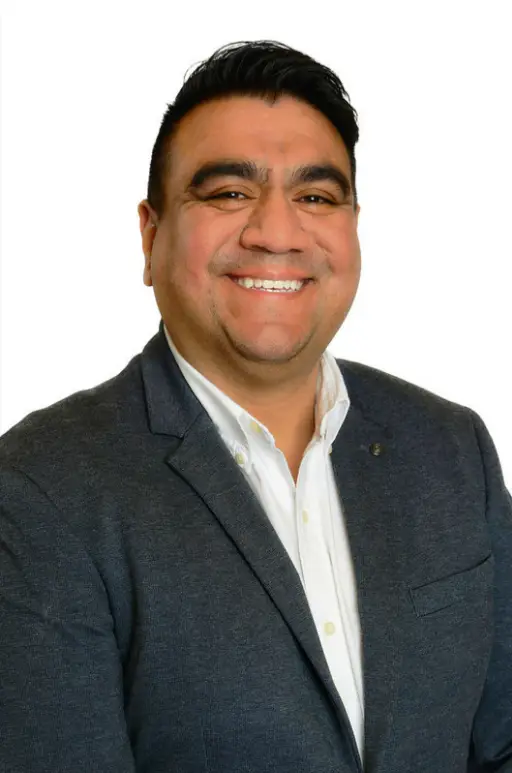
Heber Rodriguez
Founder & CEO, RRG Networks · Published July 11, 2026
Ask most aerospace MRO owners a simple question — how many times was your network attacked in the last six months? — and you’ll get a shrug. Not because they don’t care. Because nobody ever gave them a way to know.
That shrug is the real risk. Not the ransomware headline. The fact that you’re running a business where uptime is the revenue, and you can’t see what’s coming at you.
When an MRO goes down, it doesn’t lose a day. It loses the pipeline.
Your income runs on volume. Bids come in through the marketplace, you quote the RFQ, you win the work, you invoice it. That whole cycle depends on systems being up. When they’re not — ransomware, a failed server, a bad actor moving through your network — you can’t quote, can’t submit, can’t process a single accounts-receivable or accounts-payable entry.
One day down isn’t one day of lost work. It’s every quote you couldn’t return, every bid that went to the shop that was online, and every dollar that didn’t move while you were dark. For an MRO, downtime is measured in lost pipeline, and the pipeline doesn’t wait for you to recover.
So the question isn’t “do we have antivirus.” The question is: if something hit us right now, would we even know — and could we get back up before it cost us real money?
Most shops can’t answer either half of that honestly. And that’s the gap we fix — it’s the core of our managed cybersecurity service.
The insurance checkbox is not a security posture
Here’s the pattern we see over and over. A shop gets a cyber insurance questionnaire, checks the boxes it needs to check to get covered, and moves on. On paper, they’re “secure.”
But checking a box for insurance and knowing you’re protected are two completely different things. Insurance tells you what you agreed to. It doesn’t tell you whether your firewall is actually holding, whether an employee’s password is already sitting on the dark web, or whether someone could move laterally across your network right now and never trigger an alarm.
That’s the uneasy feeling a lot of owners live with. They’re trusting a provider who says everything’s fine — but the provider can’t show them proof, so it’s just faith. In aerospace, you don’t sign off on a repair based on faith. You sign off on documentation. Your security deserves the same standard.
Security isn’t a pile of tools. It’s layers you can verify.
We don’t win business by dropping a stack of software on your network and calling it secure. Tools are commodities. What actually protects an MRO is a set of security layers that each do a job, and a way to prove each one is in place.
We run every environment against a defined framework — eight layers, built over twenty years in the field:
- Employee awareness training — because the fastest way into your shop is still a convincing email to someone in accounting.
- Microsoft 365 security — locking down the email, files, and identities most shops leave wide open.
- Perimeter firewall — the wall at the edge of your network, configured and monitored, not just installed.
- Network and DNS security — controlling where traffic goes and blocking the connections attackers rely on.
- Extended detection and response (XDR), SIEM, and 24/7 managed detection — a live team watching your alerts around the clock, not a dashboard nobody checks.
- Antivirus and endpoint detection and response (EDR) — catching threats on the machines themselves.
- Machine-level firewall — the last line of defense on every individual device.
- AI security — the layer that ties the other seven together.
When we onboard or run a discovery, we don’t guess. We run a vulnerability scan, check whether your passwords are already leaking on the dark web, test how strong your firewalls really are, and see whether an attacker could move sideways through your environment — essentially probing your network the way a real one would. Then we map what we find against those eight layers and hand you a straight answer: here’s where you stand, here’s what’s missing, here’s what to fix first.
No mystery. No “trust us.” A checklist you can actually verify.
Why the eighth layer changes everything
Here’s the part most providers can’t do. A 24/7 detection service — MDR — only sees the machines it has an agent installed on. That’s a real blind spot. Your firewalls, your appliances, the systems that can’t run an agent — a lot of what matters in your environment never shows up.
So we don’t stop there. We pull the logs from everything — every appliance, every firewall, every system — into our own security monitoring, and we run AI against all of it. That AI reads through the noise, correlates what’s happening across your whole network, and flags the alerts that actually need a human — a live CVE on a machine, a firewall that fell out of policy, a pattern that looks like the early stage of an attack.
That’s the difference between “we have monitoring” and “we can see the whole board.” It’s the layer that finally answers the question I opened with: how many times were we attacked, and did we catch it? You get a real number. And the shops with an internal IT director get the full reports and quarterly reviews to back it up.
Prevention is half the job. Recovery is the other half.
Even the best layers don’t make you invincible — they make you hard to hit and fast to recover. So the second thing we build in is continuity: if you do get hit, whether it’s ransomware or a natural disaster, you have backups and a recovery plan (BCDR) that gets you quoting bids again fast, instead of watching a week of pipeline evaporate.
That combination — prevention plus a real recovery plan — is also what lets you look a customer or an insurer in the eye and prove you’re protected. In aerospace, that proof is worth as much as the protection itself.
What this actually gets you
Control. Instead of hoping your provider has it handled, you can see exactly where you stand, what’s been thrown at you, and what’s still exposed. Your controller stops worrying about the financial hit of a day offline. Your engineering or IT lead gets reports they can actually act on. And the owner gets the one thing that’s been missing — confidence backed by proof, not a shrug.
You don’t have to bet the business on hoping you never get hit. You can know where you stand.
See where you actually stand
If you can’t answer how many times your network was attacked this year, that’s the place to start. We’ll run a free security assessment of your environment — the same discovery we run before onboarding any aerospace client — and give you a clear, no-jargon picture of where you’re solid and where you’re exposed.
No commitment. Just a real answer to a question you should already have.
Schedule your free security assessment or call (844) 919-8534.
RRG Networks — a South Florida managed intelligence provider helping aerospace MRO companies see, secure, and stay ahead of the threats that put their pipeline at risk.
— About the author
Heber Rodriguez
Founder & CEO, RRG Networks
Heber Rodriguez is the founder and CEO of RRG Networks. Since 2016, he and his team have delivered managed IT, cybersecurity, and compliance services to South Florida businesses — built on real engineers, fast response times, and predictable outcomes.
Learn more about RRG— Ready When You Are
Want this kind of help for your business?
A 30-minute discovery call. No pitch, no pressure — just a real conversation with a real engineer about whether we can help.
Talk to us
Practical IT and security for South Florida SMBs. No form — call a real engineer.
Call (844) 919-8534